
Shoulder Embolization For Shoulder Arthritis
-

- Tweet
- Share


Vascular Surgery Associates, LLC
Vascular Surgery & Podiatry located in Bel Air, MD & Towson, MD
Chronic shoulder pain from arthritis can make everyday activities, such as reaching overhead, getting dressed, lifting objects, or sleeping comfortably, difficult. When medications, physical therapy, and injections don't provide enough relief, you may be looking for alternatives to major shoulder surgery.
At Vascular Surgery Associates, LLC, our vascular specialists can help patients explore minimally invasive approaches to chronic joint pain, including shoulder artery embolization. This emerging treatment targets abnormal blood vessels associated with inflammation and may offer an option for selected patients with persistent shoulder pain.
With locations throughout Maryland, including Bel Air, Towson, Westminster, Elkton, and Ellicott City, Vascular Surgery Associates helps patients understand their treatment options. Call 855-648-9982 or request an appointment online to schedule a consultation.
Shoulder Embolization for Shoulder Arthritis Q&A
What is shoulder arthritis?
Shoulder arthritis occurs when cartilage within the shoulder joint gradually wears down, allowing the bones to rub against each other. The most common form is osteoarthritis, which can cause pain, inflammation, stiffness, and reduced mobility.
Common symptoms of shoulder arthritis include:
- Persistent shoulder pain that worsens with activity
- Stiffness or difficulty moving the arm
- Pain when lifting or reaching overhead
- Discomfort that interrupts sleep
- Grinding, clicking, or catching sensations in the shoulder
- Difficulty with daily activities such as dressing or carrying groceries
As arthritis progresses, inflammation in the tissues surrounding the joint may contribute to ongoing discomfort.
What is shoulder artery embolization?
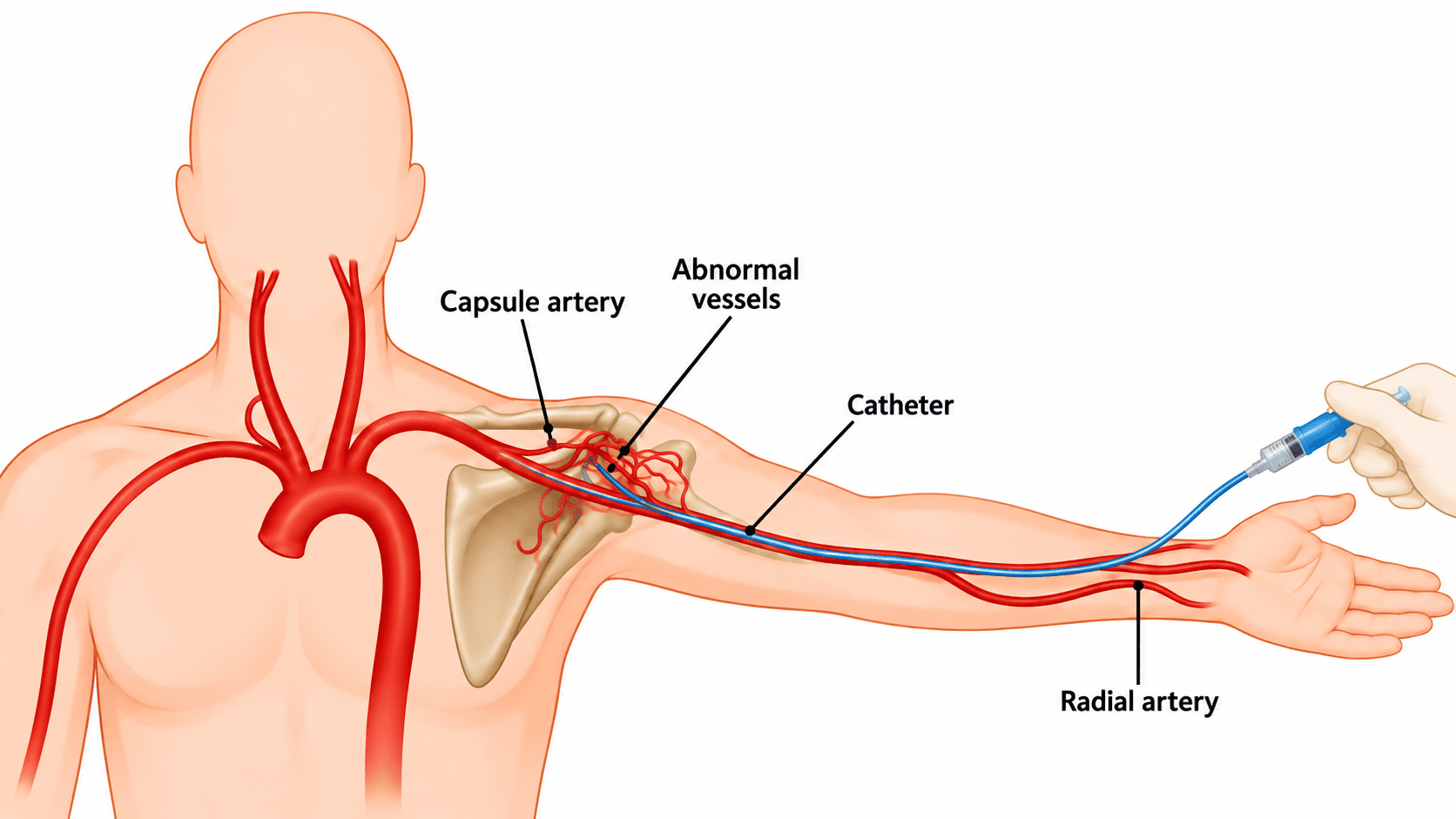
Shoulder artery embolization is a minimally invasive, image-guided procedure designed to reduce abnormal blood flow associated with inflammation in and around the shoulder.
Chronic inflammation can stimulate the growth of small, abnormal blood vessels in affected tissues. These vessels may contribute to pain and persistent inflammation.
During shoulder embolization, a specialist uses a thin tube called a catheter to reach selected arteries supplying the painful area. Tiny embolic particles or other specialized materials are then delivered to reduce abnormal blood flow while preserving circulation to healthy tissues.
The goal is to reduce inflammation-related pain and potentially improve shoulder comfort and movement without a large surgical incision.
Shoulder embolization is an emerging treatment. Research has shown encouraging results for some causes of chronic shoulder pain, especially frozen shoulder, but its effectiveness specifically for shoulder osteoarthritis has not yet been established.
Who might be a candidate for shoulder embolization?
Shoulder artery embolization may be considered for carefully selected patients with persistent shoulder pain who have not responded adequately to conventional treatment.
You may benefit from an evaluation if you:
- Experience chronic shoulder pain that interferes with daily activities
- Have been diagnosed with shoulder arthritis or another inflammatory shoulder condition
- Have tried treatments such as physical therapy, medications, or injections without sufficient relief
- Want to explore minimally invasive alternatives before considering major surgery
- Are unable or unwilling to undergo shoulder surgery
Not every type of shoulder pain is suitable for embolization. Your specialist will review your symptoms, medical history, imaging, and previous treatments to determine whether further evaluation is appropriate.
What happens during a shoulder embolization procedure?
Shoulder embolization is performed using specialized imaging equipment to identify and treat blood vessels associated with inflammation.
The procedure generally involves the following steps:
- Preparing for treatment: The treatment area is numbed with local anesthetic, and sedation may be provided to keep you comfortable.
- Accessing an artery: Your specialist inserts a small catheter into an artery, often through the wrist or another appropriate access site.
- Identifying abnormal vessels: X-ray imaging and contrast dye help locate abnormal blood vessels around the painful shoulder.
- Performing embolization: Specialized materials are delivered through the catheter to reduce excess blood flow in the targeted vessels.
- Completing treatment: The catheter is removed, and the access site is covered with a dressing.
Shoulder embolization is typically an outpatient procedure, meaning many patients can return home the same day after a period of observation.
What are the potential benefits of shoulder embolization?
For appropriately selected patients, potential benefits include:
- Minimally invasive treatment without a large surgical incision
- Targeting inflammation-associated blood vessels
- Potential reduction in chronic shoulder pain
- Possible improvement in comfort and range of motion
- Relatively short recovery compared with major shoulder surgery
- Preservation of the shoulder joint
Research involving frozen shoulder and certain other chronic shoulder conditions has reported improvements in pain and function. However, results vary, and more research is needed to establish whether patients with shoulder osteoarthritis experience similar benefits.
What should I expect after shoulder embolization?
Most patients are monitored for a short period after the procedure and can return home the same day if there are no complications.
Temporary soreness, bruising, or discomfort near the catheter insertion site may occur. Your specialist will provide instructions regarding activity restrictions, medications, and follow-up care.
If treatment is successful, improvements in pain and movement may develop gradually over the following weeks or months. Continued physical therapy or other treatments may be recommended to help maintain shoulder mobility.
Does shoulder embolization cure shoulder arthritis?
No. Shoulder embolization does not reverse cartilage damage, restore worn joint surfaces, or cure osteoarthritis.
The procedure targets abnormal blood vessels associated with inflammation, which may contribute to shoulder pain. Its effectiveness specifically for shoulder arthritis is still being investigated.
Some patients may continue to require medications, rehabilitation, injections, or orthopedic surgery to manage their condition.
Is shoulder embolization safe?
Published studies involving chronic shoulder pain have reported encouraging safety results, but shoulder embolization still carries risks.
Possible complications include bruising or bleeding at the catheter insertion site, temporary pain, skin discoloration, blood vessel injury, unintended blockage of healthy vessels, and reactions to contrast dye.
Your specialist will discuss the potential benefits and risks in relation to your medical history. Insurance coverage may vary because the treatment remains investigational for some conditions.
Explore Your Shoulder Pain Treatment Options
Living with persistent shoulder pain doesn't mean you have to stop enjoying your daily activities. Understanding the cause of your symptoms is the first step toward finding an appropriate treatment
At Vascular Surgery Associates, LLC, our team helps patients explore vascular and minimally invasive treatment options for chronic joint pain.
To learn more about shoulder embolization and whether it may be appropriate for your condition, call 855-648-9982 or request an appointment online today.
Services
-
Abdominal Aortic Aneurysmmore info
-
Achilles Tendinitis Microembolizationmore info
-
Aneurysmsmore info
-
Ankle Discolorationmore info
-
Arterial Blockagesmore info
-
Arterial Diseasemore info
-
Carotid Artery Diseasemore info
-
Claudicationmore info
-
Deep Vein Thrombosismore info
-
 Diagnostic Consultationmore info
-
Dialysis Accessmore info
-
Elbow Embolizationmore info
-
Genicular Artery Embolization (GAE)more info
-
Knee Arthritismore info
-
Leg Discolorationmore info
-
Leg Painmore info
-
Leg swellingmore info
-
Lymphedemamore info
-
Pelvic Congestion Syndromemore info
-
Peripheral Artery Angioplasty Treatmentmore info
-
Peripheral Vascular Diseasemore info
-
Plantar Fascia Embolizationmore info
-
Podiatrymore info
-
Sclerotherapymore info
-
Shoulder Embolization for Shoulder Arthritismore info
-
Spider Veinsmore info
-
Strokesmore info
-
Ulcersmore info
-
Varicose Veinsmore info
-
Varithena Microfoam Vein Treatmentmore info
-
Vascular Surgerymore info
-
Vascular Ultrasoundmore info
-
VenaSealmore info
-
Wound Caremore info
